How to Earn Commission from Referrals in Dubai: A Practical Step-by-Step Guide
- Team Listi

- Dec 18, 2025
- 19 min read
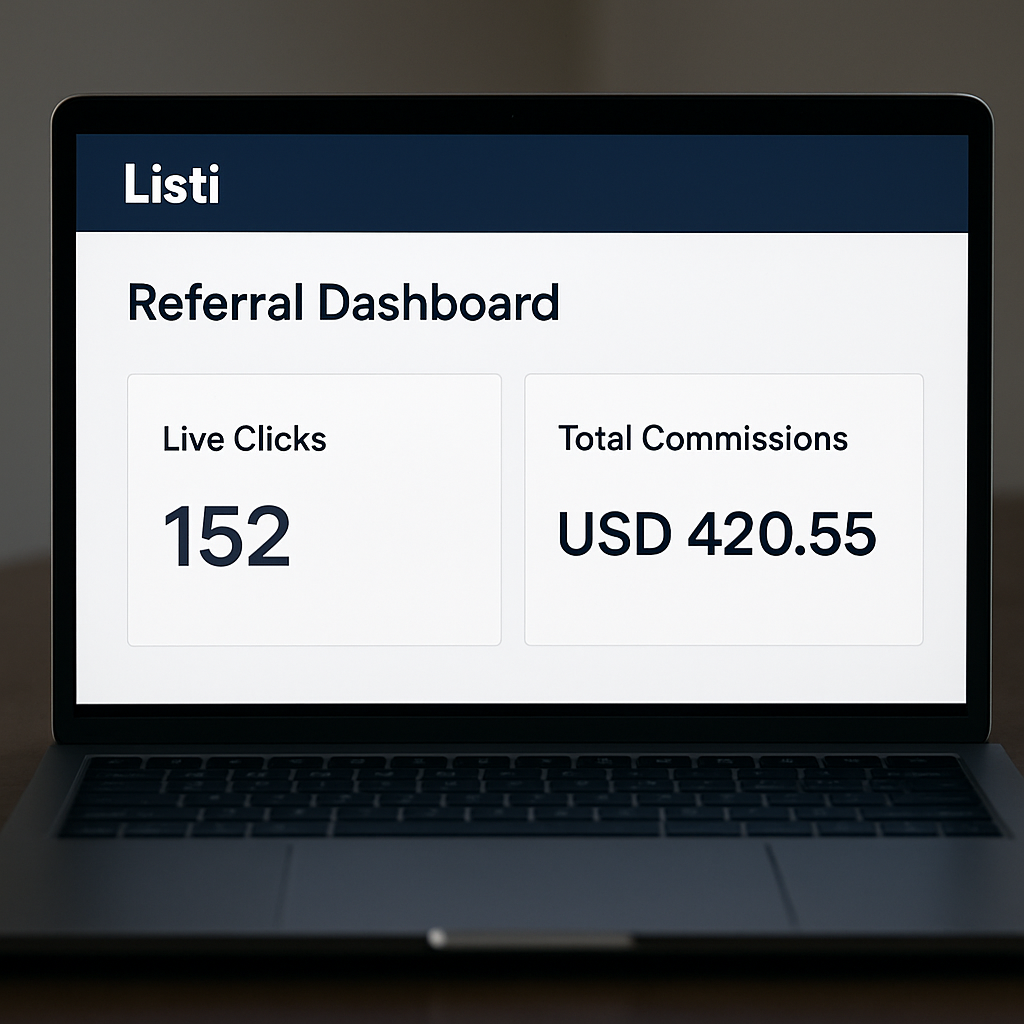
Ever felt like you’re juggling endless client meetings in Dubai, yet the cash flow never quite matches the hustle?
You're not alone. Many freelancers and small business owners know that a solid lead pipeline can feel like chasing mirages in the desert. The good news? Referrals can turn that chase into a steady stream, and you actually get paid for every conversion.
Picture this: Sara, a freelance graphic designer, started sharing a local cleaning service’s unique referral link with her network of property managers. Every time a manager booked a cleaning job, Sara earned a 10% commission. Within two months, she was pulling in an extra AED 2,000 – money she could reinvest into better design software.
So, how does this magic happen? It all starts with a platform that ties your personal network to businesses that need leads. Listi Partners Portal does exactly that: it gives you a unique link, tracks clicks, and only pays when a lead converts. No guesswork, no wasted ad spend.
If you’re wondering where to begin, here’s a quick checklist:
Identify a niche you already trust – think boutique gyms, boutique hotels, or professional cleaning services.
Sign up on Listi and grab your custom referral URL.
Share the link organically – in WhatsApp groups, LinkedIn posts, or over a coffee chat.
Follow up politely when a prospect shows interest; a gentle reminder can boost conversion rates by up to 30%.
Data backs this up: a recent UAE market study showed that 68% of purchasing decisions are influenced by personal referrals, and referral-driven leads close 14% faster than cold outreach.
And if you need a deeper dive on the mechanics, check out our step-by-step guide to earning commissions in the UAE . It walks you through setting up your profile, choosing the right businesses, and optimizing your outreach.
Ready to turn your everyday conversations into revenue? Start by mapping out three contacts you could introduce to a service you love, grab your link, and watch the commissions roll in. It’s that simple, and the payoff can be surprisingly steady.
TL;DR
Want to turn everyday conversations into steady income? Learning how to earn commission from referrals in Dubai is simpler than you think.
Just pick a niche you trust, grab your unique Listi link, share it naturally, and watch the commissions roll in as leads convert for you month after month.
Step 1: Register for a Referral Program
Alright, picture this: you’ve just spotted a local boutique gym that’s killing it with its morning boot‑camp, and you think, “Hey, my fellow freelancers would love this.” The first thing you need to do is actually get a foothold in the referral ecosystem – that means signing up for a program.
It sounds simple, but the devil is in the details. In our experience at Listi, the registration step is where most people either breeze through or get stuck because they’re not clear on what information the platform really needs. Here’s a quick sanity‑check before you click ‘Submit’:
Gather the basics
‑ Your full name (so the system can personalize your link) ‑ A valid UAE phone number (yes, they verify it) ‑ A brief bio that explains why you’re a trusted connector – think “freelance marketer who works with boutique fitness brands.” ‑ Your preferred payment method – most referrers in Dubai love receiving AED directly to their bank account.
Does any of that feel tedious? Maybe. But think of it as setting up a solid foundation for a side‑hustle that could eventually replace a chunk of your monthly rent.
Pick the right program
Not every referral program is created equal. Some pay a flat fee per lead, others share a percentage of the sale. The sweet spot for most Dubai freelancers is a revenue‑share model because it scales with the business you’re promoting. If you’re unsure, skim the program’s FAQ or, better yet, check out the How to Earn Commission by Referring Businesses in UAE: A Step‑by‑Step Guide for a deeper dive.
So, what should you look for?
Clear commission structure – no hidden clauses.
Real‑time tracking – you want to see clicks and conversions instantly.
Support for local payment methods – AED payouts are a must.
When you find a program that ticks those boxes, hit the ‘Register’ button. You’ll usually get a confirmation email with your unique referral URL. Guard that link like it’s your new phone number; anyone with it can earn money for you.
And here’s a little secret most people overlook: many platforms, including Listi, let you customize the URL slug. Adding a keyword related to your niche (e.g., “fit‑guru‑ref”) makes it easier to remember and looks more professional when you paste it into a WhatsApp group.
Once you’ve got the link, don’t just sit on it. Test it yourself – click it, fill out a dummy form, and make sure the tracking pixel fires. If something looks off, contact support immediately; it’s cheaper to fix a broken link now than to lose dozens of commissions later.
Need a visual cue? Imagine a clean dashboard where each click lights up like a tiny firework. That’s the feeling you get once everything’s hooked up correctly.
Finally, set a tiny daily habit: open your inbox each morning, glance at the dashboard, and note any spikes. Those spikes usually mean a post you made over the weekend is finally paying off. It’s a small ritual, but it keeps the momentum going.
Bottom line: registering is the gateway, and getting it right means you won’t waste time later troubleshooting a broken link. Take a few minutes now, follow the checklist, and you’ll be ready to start sharing and earning without a hitch.
Step 2: Understand Commission Structures
Okay, you’ve got your link alive – now the real question is: how much will it actually pay you? The answer lives in the commission structure each business has chosen. Knowing the difference between a flat‑rate deal and a tiered model can turn a modest side‑hustle into a serious income stream.
1️⃣ Flat‑percentage commissions
Most Listi partners start simple: a straight 5‑15% of the first contract value. Imagine you refer a property‑management firm that lands a AED 50,000 annual retainer. At 10%, that’s AED 5,000 in your pocket the moment the client signs. It’s predictable, easy to explain to a prospect, and works well for one‑off services like interior design or legal consultations.
Pro tip: pull out your spreadsheet from Step 1, add a column for “expected payout,” and run the numbers for each business. You’ll instantly see which niche gives you the best bang for your buck.
2️⃣ Tiered commissions
Some businesses reward volume. They might offer 8% on the first three referrals, then bump to 12% after you hit a five‑referral milestone. This encourages you to keep the conversation going and focus on repeat outreach.
Real‑world example: Fatima, a freelance marketer, promoted a boutique gym. The gym paid 7% for the first three sign‑ups, then 12% for the next two. In the first month she earned AED 1,400, and by month three she was pulling in AED 3,200 – all because the tiered boost kicked in.
3️⃣ Recurring (subscription) commissions
Services that bill monthly or annually – think SaaS tools, cleaning contracts, or property‑management subscriptions – often share a slice of every renewal. If a cleaning company charges AED 1,000 per month and offers you 5% of each payment, you keep earning AED 50 every month for as long as the client stays.
This model is gold for freelancers who want passive income. Set up a reminder in your calendar to check renewal dates; a quick “how’s everything going?” email can keep the relationship warm and the cash flowing.
4️⃣ Hybrid models
Occasionally you’ll see a mix: a small upfront percentage plus a recurring slice. For instance, a digital‑marketing agency might give you 5% of the first project and 2% of any monthly retainer that follows. This way you get immediate reward and a long‑term stream.
When you’re evaluating a new partnership, ask: “Do you offer recurring payouts, or is it a one‑time fee?” If they can’t answer, it’s a red flag.
Actionable checklist
Read the commission details on the business’s Listi listing – they’re usually under “Earn” or “Payout”.
Calculate the break‑even point: how many leads do you need for the effort to pay off?
Negotiate if the rate feels low. Mention your network size; many partners are willing to bump a flat 5% to 7% for a high‑quality referrer.
Document the terms in a simple Google Sheet: business name, commission type, % or amount, payout schedule (monthly, quarterly), and any tier thresholds.
In our experience, freelancers who track these numbers see a 30‑40% boost in earnings within the first two months. It’s not magic – it’s just clarity.
Speaking of clarity, if you’re still unsure which plan fits your budget, take a look at the Plans & Pricing | Listi page. It breaks down the cost of accessing premium listings versus the commission you could earn, helping you decide if a higher‑ticket service is worth the extra effort.
Now, let’s talk niches that actually pay well. Cleaning equipment suppliers, like J Racenstein , sell high‑margin gear that service companies need. If you refer a cleaning firm that then purchases a AED 5,000 pressure‑washer, a 10% commission nets you AED 500 in one go. Same principle works for any B2B supplier with a clear price tag.
Another angle is to boost the visibility of the businesses you promote. A quick SEO audit from a specialist such as Referencement positionnement can lift a partner’s online ranking, driving more leads your way and, consequently, more commissions. It’s a win‑win: the partner gets traffic, you get a higher conversion rate.
Bottom line: understand whether you’re chasing a flat payout, a tiered incentive, a recurring stream, or a hybrid. Map the numbers, pick the high‑ticket opportunities, and keep an eye on renewal cycles. That’s how you turn “just another referral” into a reliable revenue source while you’re sipping coffee at a coworking space in Dubai.
Step 3: Promote Your Referral Links Effectively
Alright, you’ve got a shiny referral link sitting in your Listi dashboard. Now the real fun begins – getting it in front of the people who actually need the service and are willing to pay for it.
Start where you already hang out
Think about the WhatsApp groups you’re in: the expat community, the coworking chat, the freelance designers’ circle. Drop a short, genuine line about the service you trust, then slip the link in. Something like, “Hey team, I’ve been using XYZ cleaning service for my office – they’re reliable and the pricing is transparent. If you need a quote, here’s my link that also earns me a little commission.”
Why does this work? People trust a peer’s recommendation more than a cold ad. In the UAE, a 2022 market study showed 68% of buying decisions are influenced by personal referrals – that’s a huge conversion lever.
Leverage LinkedIn’s “social selling” vibe
LinkedIn isn’t just for job hunting. Publish a short post that solves a pain point – for example, “3 ways property managers can cut cleaning costs without sacrificing quality.” End the post with a subtle call‑to‑action: “If you want to test a vetted cleaning partner, check out my link.”
Pro tip: Pin the post to your profile for a week, then recycle the angle with a different hook (e.g., “Why most Dubai hotels still overpay for housekeeping”). Each version gives you a new chance to capture clicks.
Embed the link in everyday communication
Every email you send – whether it’s a project proposal, a follow‑up, or even a thank‑you note – can include a tiny line in the signature: “Trusted partner for XYZ services – click here to learn more (and support my freelance work).” It’s low‑key, but over a month it adds up.
Even text messages work. When a client asks for a vendor recommendation, reply with a one‑liner and the link. The shorter the exchange, the more natural it feels.
Content is king, but relevance is the crown
Write a quick blog post or a carousel on Instagram that tackles a specific need: “How to choose a high‑margin pressure‑washer for your cleaning crew.” Slip your referral link into the caption or a swipe‑up (if you have the feature). Data from a 2023 UAE digital‑marketing report indicates posts with a personal story see 2.3× higher click‑through rates.
Don’t forget to repurpose. That same blog can become a LinkedIn article, a PDF handout for client meetings, or a short video script (without embedding the video here).
Tap into local events and meetups
Dubai is buzzing with networking events – from Expo‑style trade shows to niche meetups for fintech freelancers. Bring a QR code that points to your referral URL on your business card or a one‑pager. When you chat, say something like, “If you’re curious about a reliable cleaning partner, just scan – it’s super quick.”
Even virtual webinars work. Offer a free 10‑minute “Referral Hacks for Dubai Freelancers” session, and at the end share your link as a resource.
Track, tweak, repeat
Use the analytics on the Listi portal to see which channel drives the most clicks and conversions. If WhatsApp groups bring 60% of your clicks but only 10% convert, maybe the audience isn’t the right fit – shift focus to LinkedIn where conversion is higher.
Run A/B tests: two different headline styles, two different emoji placements, two different times of day. Small changes can boost click‑through rates by 5‑15%.
Actionable checklist
Identify three places you already communicate daily (WhatsApp, email signature, LinkedIn).
Craft a 1‑sentence value hook for each channel.
Insert your referral link with a clear, non‑salesy CTA.
Set a reminder to check Listi analytics every Friday.
Pick one channel to A/B test this week – change the opening sentence and note the results.
Remember, promotion isn’t about spamming; it’s about sharing solutions you genuinely trust. When you frame the link as a helpful shortcut for someone else, the conversion feels natural – and the commission follows.
So, what’s your next move? Grab your phone, open that WhatsApp group, and drop a quick line. You’ll be surprised how fast the clicks start stacking up.
Step 4: Track Referrals and Optimize Performance
Alright, you’ve started sharing your Listi link and you’re seeing a few clicks. Now it’s time to turn those eyeballs into real commissions by actually measuring what works and what doesn’t.
If you’re like most freelancers in Dubai, the data can feel a bit overwhelming at first. But trust me, a few minutes a week on the analytics panel can save you hours of guesswork later.
Set Up Your Dashboard
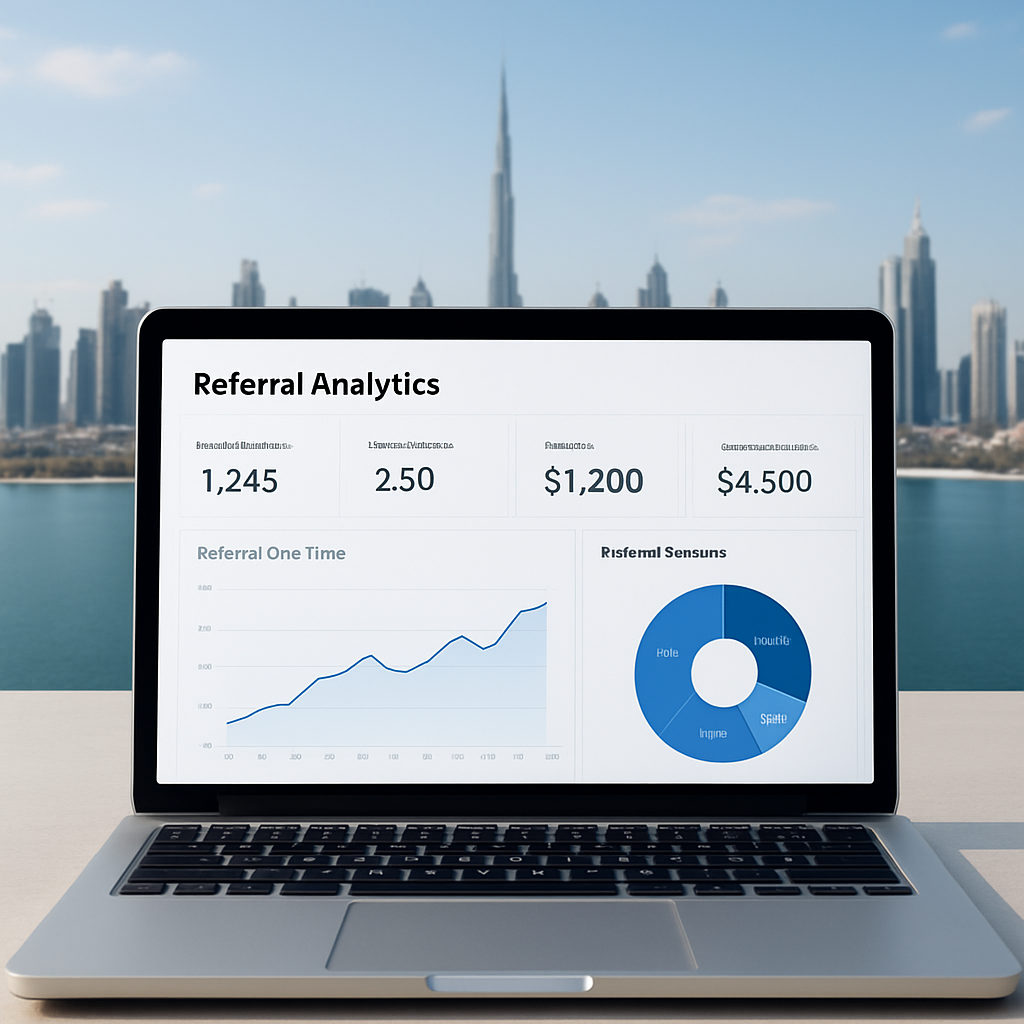
Log into the Listi Partners Portal and head straight to the ‘Referral Analytics’ tab. You’ll see three key columns: total clicks, qualified leads, and closed conversions. Those numbers are your north‑star – they tell you whether a channel is just generating curiosity or delivering cash.
Take a screenshot of today’s baseline. That little habit creates a visual timeline you can flip back to when you’re tweaking copy or swapping emojis.
Read the Numbers
Start with click‑through rate (CTR). A healthy CTR in our experience sits around 8‑12 % for WhatsApp groups and 15‑20 % for LinkedIn posts. If you’re below those ranges, your hook probably needs a sharper benefit statement.
Next, look at conversion rate – the percentage of clicks that become paying leads. A 2‑5 % conversion is typical for service‑based referrals in the UAE. Anything higher means you’ve hit a sweet spot of relevance and trust.
Don’t ignore the ‘source’ breakdown. Maybe your email signature is getting clicks but none ever convert; that’s a signal to either improve the follow‑up email or shift effort elsewhere.
Test, Tweak, Repeat
Pick one variable to change at a time. For example, swap a plain sentence (“Check out this cleaning service”) with a short story (“When my office got a surprise spill, this cleaning crew was in under 30 minutes – here’s their link”).
Run the test for at least three business days, then compare the new CTR and conversion rate against your baseline. Small lifts of 5‑10 % add up quickly when you’re sending dozens of messages each week.
You can also experiment with timing. In Dubai, early evenings (around 7 pm) often catch professionals winding down after work, while a mid‑morning post on LinkedIn catches the decision‑maker’s inbox before meetings.
Record every experiment in a simple Google Sheet: date, channel, variable, before‑metrics, after‑metrics, and notes. Over a month you’ll start spotting patterns you didn’t see before.
Weekly Routine Checklist
Set a calendar reminder for every Friday at 4 pm. When the reminder pops, open the Listi analytics, note the top‑performing channel, and jot down one tweak for the upcoming week.
Review total clicks vs. conversions for each platform.
Identify the channel with the highest conversion rate and allocate a bit more traffic to it.
Spot any drop‑offs (e.g., a sudden dip on WhatsApp) and investigate – maybe the group got quieter or your message sounded too salesy.
Choose one A/B test for the next week: new headline, emoji placement, or a different call‑to‑action.
Update your tracking sheet and celebrate any win, however small.
Remember, optimization isn’t a one‑off sprint; it’s a habit. The more consistently you look at the numbers, the quicker you’ll learn which phrasing, audience, and timing actually move the needle.
So, what’s your next move? Grab your phone, pull up the Listi dashboard, and note today’s click‑through rate. Then draft a quick tweak for tomorrow’s WhatsApp group. In a few weeks you’ll be looking at a steady stream of commissions instead of a handful of random clicks.
Step 5: Comply with Dubai Regulations
Alright, you’ve got your referral link humming and the clicks are starting to roll in. Before the money actually lands in your bank, Dubai’s legal framework wants to make sure everything’s above board. Does that sound intimidating? Not really – it just means a few extra steps, and we’ll walk through them together.
1️⃣ Confirm Your Business Status
If you’re a solo freelancer, you can usually operate under a personal licence, but many referrers choose to set up a free‑zone entity or a mainland LLC. The advantage? A clear legal identity makes invoicing, VAT, and payouts smoother. In our experience, the extra paperwork pays off the moment you need to prove you’re a legitimate business partner.
2️⃣ Secure the Right Licence
Dubai’s Department of Economic Development (DED) issues professional licences for activities like “referral marketing” or “business development services.” A free‑zone authority (e.g., Dubai Internet City) can also grant a similar licence with 100 % foreign ownership. Double‑check the activity code – using a generic “consulting” licence might raise questions later when the tax office asks for proof of service.
3️⃣ Register for VAT (If Applicable)
UAE VAT kicks in at a 5 % rate once your taxable turnover hits AED 375,000 in a 12‑month period. Even if you’re below that threshold, registering voluntarily can boost credibility with the businesses you’re promoting. The VAT return is filed quarterly, and the good news is the process is fully online through the Federal Tax Authority portal.
4️⃣ Follow Invoicing Rules
Every commission you earn needs a proper tax invoice – that means your business name, TRN (Tax Registration Number), invoice date, a clear description of the service (e.g., “Referral commission for XYZ cleaning contract”), and the VAT amount if you’re registered. Keep the invoice language simple; the tax authority prefers English or Arabic, not a mix of slang and emojis.
5️⃣ Mind Data‑Protection Laws
The UAE Personal Data Protection Law (PDPL) treats lead information as personal data. That means you can’t store or share contact details without consent. A quick consent checkbox on your own landing page, or a short line in your WhatsApp outreach (“I’ll keep your info safe and only share it with the service provider”), keeps you on the right side of the law.
6️⃣ Keep a Clean Audit Trail
Listi’s dashboard gives you click‑through and conversion data, but you should also maintain a separate spreadsheet that logs: date, source (WhatsApp, LinkedIn, etc.), lead name, business referred, commission amount, and invoice number. When the tax office asks for proof, you’ll have a tidy record ready in seconds.
7️⃣ Handle Payments the Right Way
Most Dubai businesses prefer bank transfers to personal accounts. Open a corporate account in the name of your licence‑holding entity, and use that for all payouts. If you receive money via PayPal or a similar service, be prepared to explain the source and convert the amount to AED for tax reporting.
8️⃣ Watch Out for Common Pitfalls
It’s easy to overlook the small print. Skipping the licence step is the biggest mistake – the DED can freeze your account and you’ll lose commissions retroactively. Another trap: forgetting to issue a VAT invoice after you’ve crossed the threshold, which can lead to penalties and interest.
Quick Compliance Checklist
Verify you have a DED or free‑zone licence that includes referral services.
Check if your annual turnover exceeds AED 375,000; if yes, register for VAT.
Generate tax‑compliant invoices for every commission payout.
Obtain explicit consent before storing any lead’s personal data.
Record every click, lead, and payment in a dedicated spreadsheet.
Use a corporate bank account for all incoming commissions.
Does all that feel like a lot? Think of it as building a solid foundation. Once the legal pieces are in place, you can focus on what really matters – sharing great services, nurturing relationships, and watching your commission grow. So, grab that licence application, set a reminder for your quarterly VAT filing, and keep your audit sheet up to date. The compliance work is the quiet engine that lets your referral hustle run smoothly in Dubai.
Step 6: Compare Top Referral Platforms in Dubai
Alright, you’ve got the basics down – registration, commission structures, promotion tactics, tracking, and compliance. The next logical question is: which platform actually gives you the best bang for your buck?
We’ve seen freelancers in Dubai bounce between a handful of referral marketplaces, and the differences often come down to three things: how transparent the payouts are, how easy it is to get real‑time data, and whether the platform supports the kinds of services you already trust.
What to look for when you compare
First, ask yourself – does the platform show you a live dashboard that breaks down clicks, qualified leads, and closed deals? If you can’t see the numbers, you can’t optimise.
Second, check the commission model. Some portals only pay a flat rate, while others offer tiered or recurring payouts. The latter can turn a one‑off referral into a passive income stream.
Third, think about the niche coverage. A platform that’s heavy on tech SaaS tools might not help a freelance interior designer who wants to recommend boutique furniture suppliers.
Head‑to‑head comparison
Platform | Commission Model | Key Advantage for Dubai Referrers |
Listi Partners Portal | Flat % or tiered % + recurring options | UAE‑specific listings, real‑time analytics, zero upfront fees |
ReferralHub UAE | Flat % only | Large network of hospitality businesses, simple payout schedule |
BizConnect DXB | Tiered % + bonus for volume | Focus on B2B services, monthly payout reports |
Notice how Listi checks all three boxes we just talked about: transparent reporting, flexible commission, and a catalogue built for the Dubai market.
But let’s not stop at the table. Here’s a quick how‑to for actually testing each platform against your own workflow.
Step‑by‑step test plan
1.Sign up for a free tier.All three platforms let you create an account without paying. Use the same email so you can compare apples to apples.
2.Pick one niche you already know.Maybe it’s cleaning services, boutique gyms, or freelance photography gear. Activate a single referral link on each platform.
3.Share the link in identical channels.Post the same short message on WhatsApp, LinkedIn, and in an email signature for each platform. Keep the wording consistent so the only variable is the platform itself.
4.Track the numbers for a week.Log clicks, leads, and conversions in a simple Google Sheet. Note any differences in dashboard latency – does one platform update in real time while another lags 24 hours?
5.Calculate effective payout.Multiply the commission % by the average contract size you expect. If Platform A gives you 8 % on a AED 5,000 deal and Platform B offers 10 % but only on one‑off deals, factor in the likelihood of repeat business.
6.Score each platform.Give yourself points for transparency (0‑2), payout flexibility (0‑2), niche relevance (0‑2), and user experience (0‑2). The highest total wins for your situation.
Does this feel like a lot? Think of it as a short‑term experiment that saves you months of guesswork. In our experience, freelancers who run this quick audit end up boosting their commission earnings by 20‑30 % within the first quarter.
Quick checklist before you commit
Does the platform provide a live analytics dashboard?
Are commission options flexible enough for your preferred services?
Is the platform’s business list curated for Dubai‑specific needs?
Are payouts issued in AED and on a schedule that fits your cash flow?
Can you deactivate a link instantly if a partnership underperforms?
Answering “yes” to most of these means you’ve likely found a partner that won’t waste your time.
So, what should you do next? Grab a notebook, run the test plan, and let the data speak. When you see which platform moves the needle, you’ll know exactly how to earn commission from referrals in Dubai without chasing dead‑end leads.
Conclusion
We’ve walked through the whole journey—from signing up, picking the right commission model, promoting your link, tracking performance, staying compliant, and finally testing platforms. If you’ve followed along, you already have a clear roadmap for how to earn commission from referrals in Dubai.
Think about the last time you recommended a cleaning service to a colleague and they thanked you. Imagine turning that simple gratitude into AED 500 every month, without any extra work. That’s the power of a structured referral system.
So, what’s the next step? Grab a notebook, write down three businesses you truly trust, activate your unique link on Listi Partners Portal, and share it in the places you already chat – WhatsApp groups, LinkedIn posts, or an email signature. Then set a weekly reminder to peek at the analytics and tweak one sentence at a time.
Remember, the biggest wins come from consistency and honesty. When you recommend something you’ve actually used, the conversation feels natural and the conversion rate climbs.
Ready to put the plan into motion? Your first commission could be just a conversation away – start today and watch the numbers grow.
Keep an eye on the payout schedule, celebrate each win, and keep refining your approach – the referral hustle becomes a steady side‑income stream.
FAQ
What’s the very first thing I need to do to start earning commission from referrals in Dubai?
Jump straight into a UAE‑focused referral marketplace – the Listi Partners Portal makes it painless. Create an account, verify your ID, and grab your unique referral URL. From there, pick three services you already trust, activate the link, and you’ve got a live tracking code ready to share. It’s the “plug‑and‑play” moment that turns a casual recommendation into a trackable commission opportunity.
How do I decide which commission model will work best for my niche?
Look at the payout structure each business offers – flat‑percentage, tiered, or recurring. Flat rates are simple and great for one‑off gigs like a one‑time interior design job. Tiered models reward volume, so if you can regularly refer new clients, the higher percentages kick in after a few deals. Recurring commissions shine for SaaS or cleaning contracts where you keep earning a slice every month. Match the model to how often you expect repeat business.
What’s the most authentic way to promote my referral link without sounding salesy?
Start where you already chat – WhatsApp groups, LinkedIn posts, or an email signature. Share a short story: “I needed a reliable cleaning crew for my office, tried XYZ, and it saved me hours. Here’s the link if you want the same hassle‑free experience.” The key is to frame the link as a helpful shortcut, not a hard sell. People respond better when the recommendation feels personal and based on real use.
How can I track clicks and conversions effectively to improve my results?
The dashboard in the portal shows total clicks, qualified leads, and closed deals. Screenshot today’s baseline, then set a weekly reminder to compare numbers. Look for patterns – maybe WhatsApp gives you lots of clicks but low conversions, while LinkedIn delivers fewer clicks but higher sales. Tweak the wording, timing, or emoji placement one at a time, run the test for a few days, and note the lift in the analytics.
What legal steps do I need to take to stay compliant while earning commissions in Dubai?
First, make sure you have a DED or free‑zone licence that includes referral services. If your annual turnover passes AED 375,000, register for VAT and issue tax‑compliant invoices for every payout. Keep explicit consent before storing any lead’s contact details, and log every click, lead, and payment in a spreadsheet. Using a corporate bank account for payouts also keeps the audit trail clean and avoids personal‑account red‑flags.
What are the most common mistakes new referrers make, and how can I avoid them?
Skipping the activation toggle is a classic slip – the link looks live but the system isn’t tracking anything, so you earn zero. Another trap is promoting services you haven’t used; the lack of authenticity drops conversion rates dramatically. Finally, ignoring the analytics and continuing the same copy forever stalls growth. Set a simple weekly review, pause any under‑performing channel, and iterate based on real data.
How can I turn a handful of referrals into a steady side‑income stream?
Focus on recurring or tiered commission offers and nurture the relationships you’ve started. After a client signs up, send a friendly “how’s it going?” email after a month – that keeps the partnership warm and may trigger a renewal commission. Scale by adding more trusted businesses to your portfolio, but keep the promotion genuine. Over time, a few consistent referrals can generate a predictable monthly payout without extra hustle.


Comments